
Hi, my name is Alberto Sánchez, and I am one of the two PhD candidates in the Belmonte Lab in Madrid, Spain. I completed my Bachelor’s degree in Biomedical Engineering at Rey Juan Carlos University. After finishing my degree, I worked as a research assistant in Madrid, an experience that confirmed my desire to pursue a career in academic research. I later moved to the Netherlands, where I completed a Master’s degree in Regenerative Medicine and Technology at Utrecht University. After more than two years of studying and working there, I decided to return to Spain and start my PhD.
In the Belmonte Lab, my research focuses on the cells present in the intestine of newborn mammals called neonatal enterocytes. Unlike the enterocytes present in the adult intestine, these cells have the ability to absorb complex molecules from maternal milk and digest them inside the cell through a process known as lysosomal degradation.
We believe that this unique behaviour plays an important role in helping in the intestine adapt to the first microbial exposure after birth.
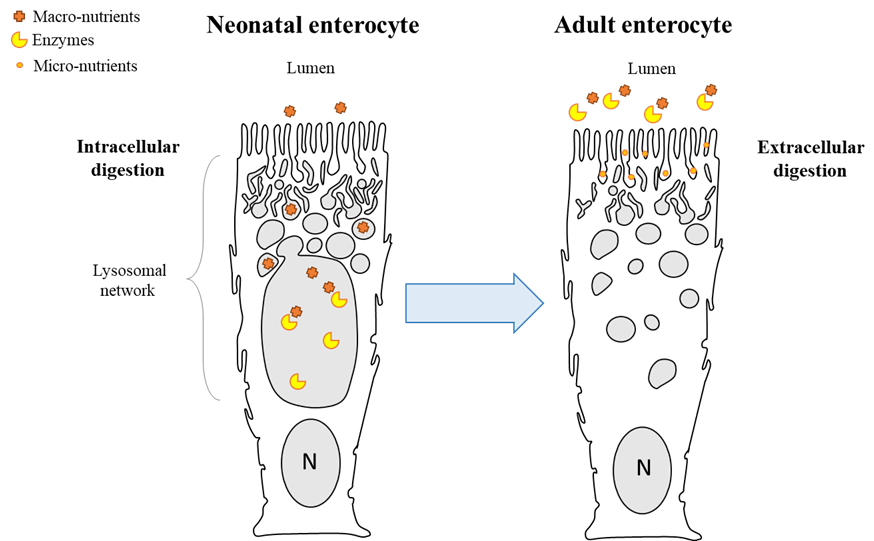
Neonatal enterocytes metabolism differs from adult enterocytes thanks to their specialization in intracellular digestion.
My project aims to understand how a process called mitophagy contributes to neonatal enterocytes absorptive function. Mitophagy is a cellular mechanism that removes damaged mitochondria, the structures responsible for producing energy for the cells.
By removing dysfunctional mitochondria by lysosomal degradation, neonatal enterocytes can maintain a balanced energy supply and function properly. When mitophagy doesn’t work correctly, damaged mitochondria accumulate and contribute to inflammation. In fact, disruptions in related cellular processes have been associated with inflammatory diseases and the risk of colorectal cancer.
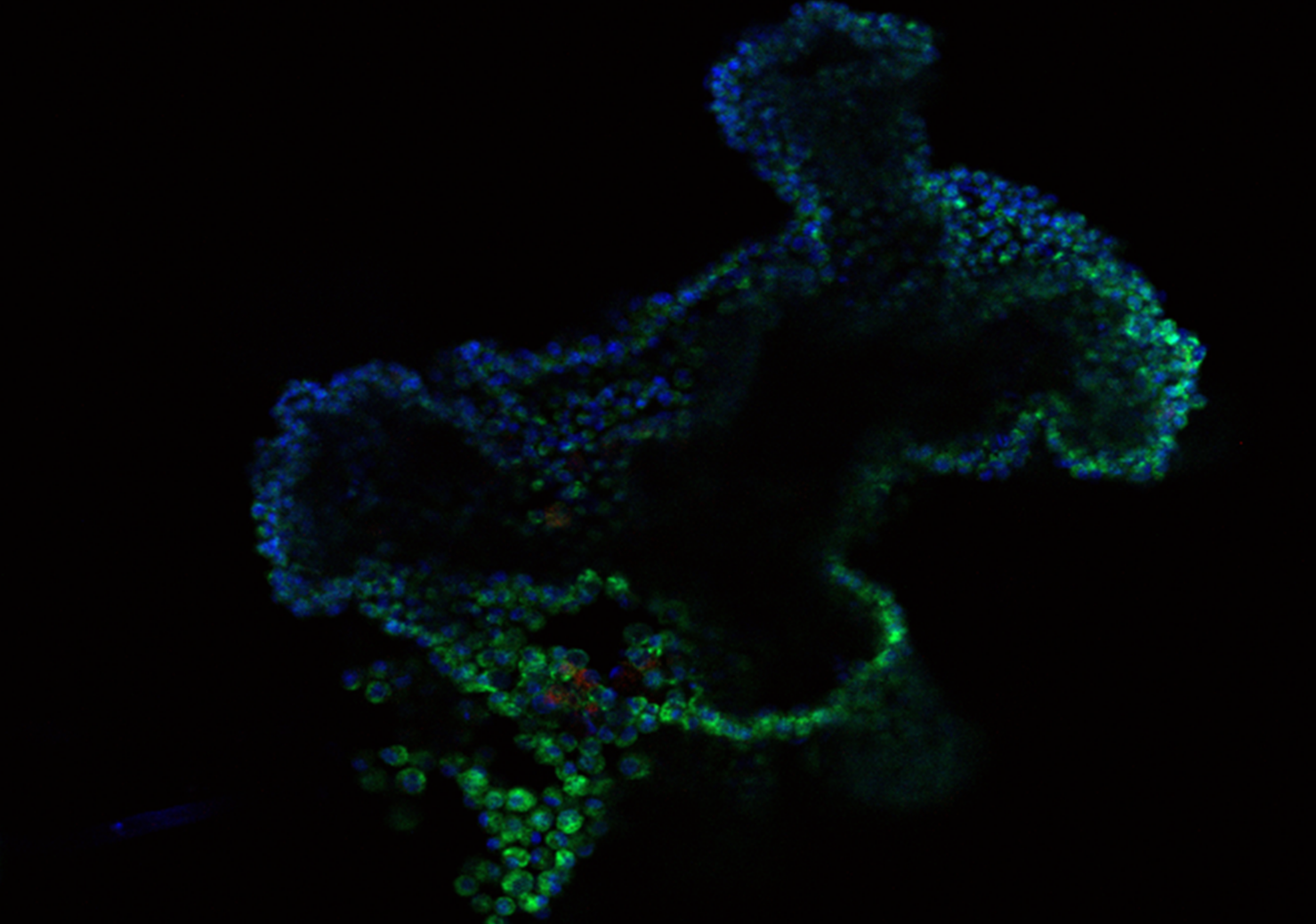
To test this, I am developing an in vitro system combining intestinal organoids, miniature version of intestine grown in the lab, with microfluidic devices with tiny channels. These channels allow to control fluid movement and mimic how breast milk flows through a newborn’s intestine.
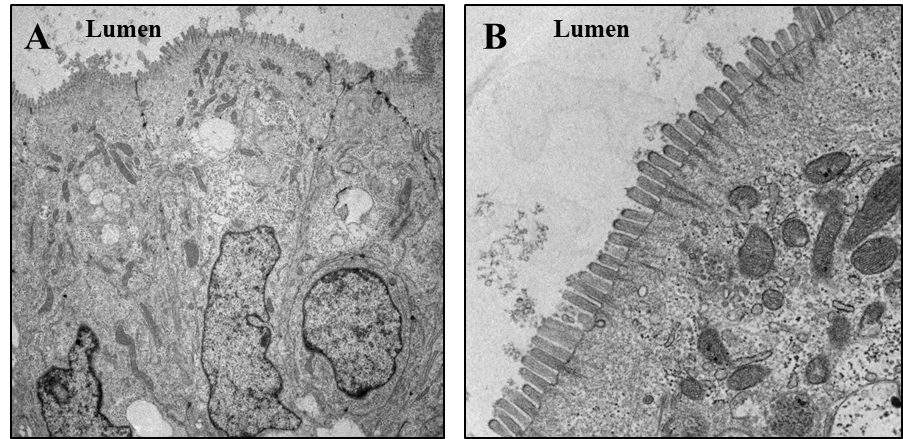
Electron microscopy pictures of intestinal organoid enterocytes (A) and their microvilli (B).

